What happens if you can't pay an off-plan instalment in Dubai?
By Tyler Newman, Host of The Off Plan ShowLast updated
A missed instalment starts a set legal process, not an instant cancellation. Under Article 11 of Dubai's off-plan law (Law No. 13 of 2008, as amended by Law No. 9 of 2009), the developer must notify the Dubai Land Department (DLD), and the DLD then gives you 30 days to pay. Only after that can the developer use the remedies in the law, and those depend on how complete the project is: in the 2009 text, up to 25% of the contract value below 60% completion, up to 40% between 60% and 80%, and above 80% the developer may keep what has been paid and claim the balance.
Before it gets that far, most buyers have options: talking to the developer early, agreeing a revised schedule in writing, or reselling the unit while their payments are still up to date. This guide explains the process, not your individual position. For a specific contract, speak to a property lawyer.
What does Dubai law say happens if you miss an off-plan payment?
The rules sit in Article 11 of Law No. 13 of 2008 Regulating the Interim Property Register, which covers off-plan homes sold in Dubai. The article was rewritten by Law No. 9 of 2009, and its first step is the same in every version: if a buyer breaches the sale contract, the developer must notify the DLD. The DLD then gives the buyer 30 days' notice to meet their obligations. That notice can be delivered in person, by registered mail or by email.
Nothing in the article lets a developer skip this step. The 30 days run from the DLD's notice, not from the date the instalment fell due, so in practice there is usually more time between a missed payment and any termination than the instalment date suggests. Your SPA may also add late-payment charges for the period an instalment is overdue; read that clause so you know what is accruing.
Article 11 covers off-plan unit sales only. It does not apply to land sale contracts that are not off-plan sales, which follow their own contract terms.
What can a developer keep if the contract is terminated?
If the 30 days pass without payment, the 2009 text of Article 11 ties the developer's remedies to how much of the project has been built. The bands below are taken from Law No. 9 of 2009 on the Dubai Legislation Portal. They are maximums: the law says 'up to', and many cases are settled before any of them apply.
The 2009 text also has a separate rule for projects where construction has not started for reasons outside the developer's control, which we leave out here. Article 11 has been amended again since 2009 (Gulf News reported an amendment in 2017), so the current consolidated text may differ from the 2009 wording. A property lawyer can confirm which version applies to your contract date.
| Project completion | What the 2009 text allows the developer |
|---|---|
| 80% or more | Keep the amounts paid and claim the rest of the price, or ask for the unit to be sold at public auction to recover what is owed |
| 60% to under 80% | Terminate and keep up to 40% of the contract value |
| Construction started, under 60% | Terminate and keep up to 25% of the contract value |
Law No. (9) of 2009 Amending Law No. (13) of 2008, Article 11(2), Dubai Legislation Portal. The English text is a translation; the Arabic prevails.
What would those bands mean on a real payment plan?
Here is the maths on a home from our site, to show why timing matters. It is an illustration of the 2009 text, not a prediction of what any developer would do.
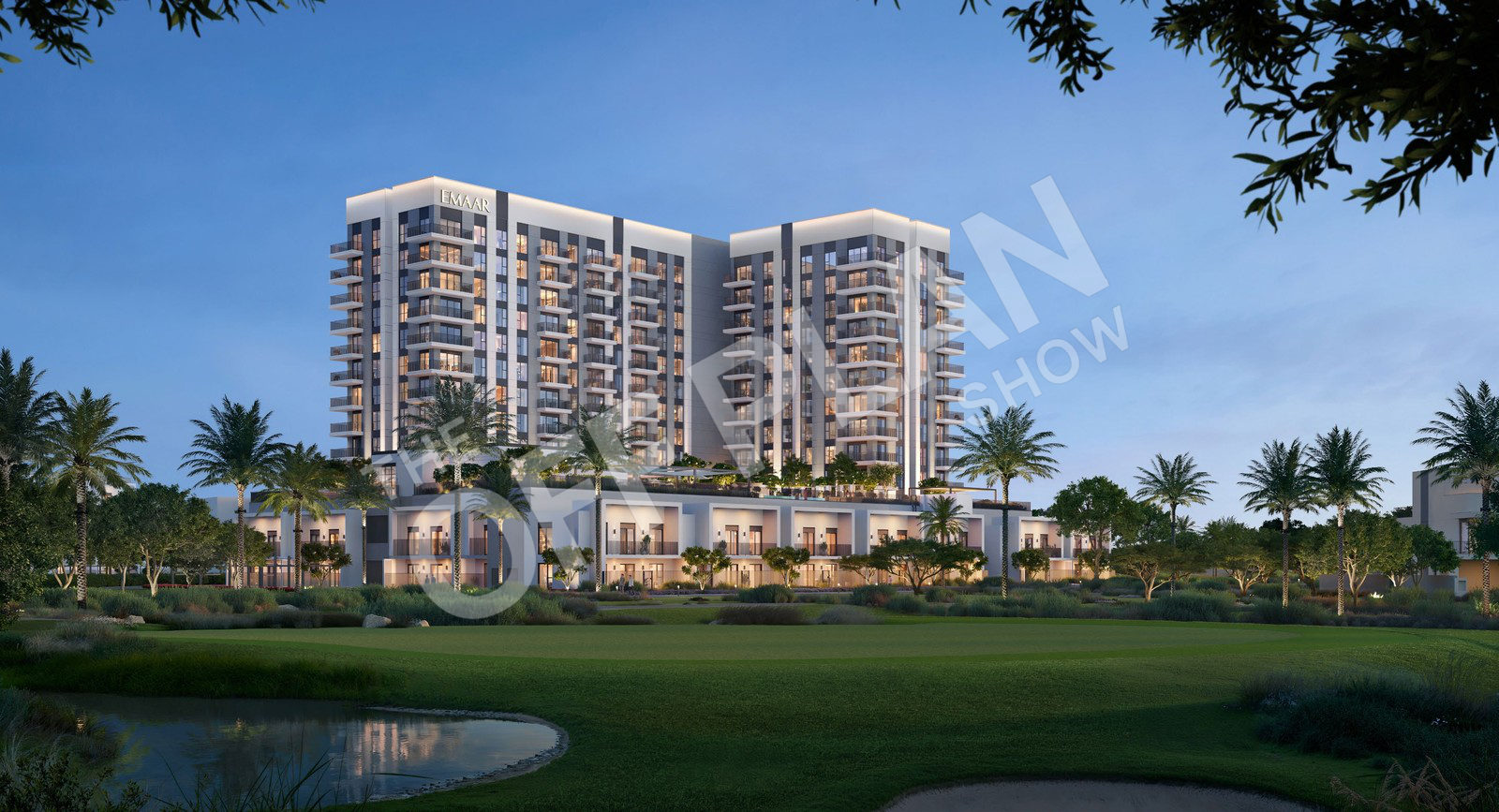
Emaar South's Golf Fields starts at AED 1.26M for a 1-bed on an 80/20 plan: 10% on booking, then 10% steps, with the later ones due at 20%, 40%, 60% and 80% construction, and 20% on completion. By the June 2027 instalment a buyer has paid 30%, or AED 378,000, before construction reaches 20%. In the under-60% band, the 2009 text caps what a developer may keep at 25% of the contract value, which is AED 315,000.
By the 60% construction instalment, the buyer has paid 70%, or AED 882,000. In the 60–80% band, the cap is 40% of the contract value, AED 504,000. Above 80%, the developer may instead keep what has been paid and pursue the balance. The point for buyers: the further a project progresses, the more is at stake, so act early.
Plan from our Emaar South page (Emaar fact sheet, checked 31 Oct 2026). Construction-linked dates are Emaar estimates.
How do you find out how complete your project is?
Completion percentage decides which band applies, so it is worth knowing. The law defines construction works as the developer having taken possession of the site and started building under plans approved by the competent authorities.
The DLD offers a technical report service whose purpose, in its own words, is to identify the percentage of completion of real estate projects. Its FAQ lists the service fee, which is paid in advance. Many developers also report construction progress to buyers directly, and construction-linked payment plans tell you something too: if your next instalment falls due 'at 60% construction', the developer is saying the project has reached that stage when it invoices you.
Keep copies of every progress update and invoice. If you ever need to discuss a revised schedule or take legal advice, the completion figure on the date of any notice is one of the first things you will be asked for.
When would any refund be paid?
Where a developer terminates in the 60–80% or under-60% bands and keeps up to the capped amount, the 2009 text says it must return the rest of what the buyer is owed within one year of termination, or within 60 days of reselling the unit, whichever comes first.
There is a separate protection if a project fails rather than the buyer. The Real Estate Regulatory Agency (RERA) can cancel a project on the basis of a reasoned report. In that case Article 11 says the developer must return all payments made by buyers, under Law No. 8 of 2007 on escrow accounts for real estate development. Your payments to a registered off-plan project go into that project's escrow account, which the DLD describes as a bank account of the project where buyers' payments are deposited.
These timelines are set by law, but how they apply to your case depends on your contract and the facts. A lawyer can check them against your SPA.
What are your options before it gets to termination?
The law describes what happens at the end of a dispute; most buyers never get there. Three options come first.
Talk to the developer early, in writing. Explain the position before the instalment is due if you can. Developers are not obliged to change a schedule, but a revised plan agreed in writing, usually as an addendum to the SPA, replaces the old dates. Get any agreement documented, not just promised on a call.
Resell while you are up to date. A resale needs the developer's NOC, and developers generally require all due payments to be settled first; Ellington's FAQ says so explicitly. Many also need a minimum share paid, often 30–40% according to Meraas. Selling is far easier before an instalment is missed than after. Our guide to selling off-plan before handover explains the steps and costs.
Take advice. If a notice has already arrived, a property lawyer can tell you which version of Article 11 applies and what your contract allows.
How does it work in Abu Dhabi?
Abu Dhabi has its own process under Law No. 3 of 2015 regulating the real estate sector, as amended by Law No. 2 of 2025. ADREC publishes the text. The developer must first notify the buyer, and any mortgage lender, by notary or registered mail, giving 60 days to pay the overdue amount. After 15 days it notifies the Department, with proof of the notice and a certificate from the escrow account trustee confirming the breach. The Department can invite both sides to an amicable settlement, recorded as an annex to the contract.
If there is no settlement and the buyer still doesn't pay, the developer may terminate without going to court. The buyer can be removed from the initial register, the unit resold after 30 days, and the developer may ask for a deduction proportionate to the breach and the project's completion. Those percentages are set by a Chairman's decision, which the Abu Dhabi Media Office named as Decision No. (165) of 2025 in March 2026. The buyer's right to go to court or arbitration is preserved.
When should you speak to a lawyer?
This guide explains how the system works. It is not legal advice, and two buyers with the same missed instalment can be in different positions depending on their SPA, their contract date and the project's progress.
Speak to a UAE-qualified property lawyer if any of these apply: you have received a notice from the DLD or ADREC; you are more than one instalment behind; the unit is mortgaged; you bought through a company; or you are unsure which version of Article 11 applies to your contract. Bring your SPA, every payment receipt, the developer's statement of account, any construction progress updates and copies of all correspondence.
If you are worried about a payment coming up rather than one already missed, start with the developer. A short written request now usually leaves more options open than a conversation after a notice has been issued.
Quick answers
Can a Dubai developer cancel my contract the day after I miss a payment?
No. Under Article 11 of Law No. 13 of 2008, the developer must notify the DLD, and the DLD gives you 30 days' notice to pay before the developer can use the remedies in the law.
How much can a developer keep if I default in Dubai?
In the 2009 text of Article 11: up to 25% of the contract value if construction has started but is under 60%, up to 40% at 60–80%, and above 80% the developer may keep what has been paid and claim the balance. The article has been amended since, so a lawyer should confirm the version for your contract.
Can I sell my off-plan unit if I'm behind on payments?
It is harder. Developers generally require all due payments to be cleared before they issue a resale NOC. Reselling while you are up to date is usually the simpler route.
Will I get money back if my contract is terminated?
Under the 2009 text, where the developer keeps a capped amount, the rest must be returned within one year of termination or 60 days of resale, whichever is earlier. If RERA cancels the project, all payments must be returned under the escrow law.
Is the process different in Abu Dhabi?
Yes. Under Law No. 3 of 2015 as amended in 2025, the developer gives 60 days' notice by notary or registered mail, informs the Department after 15 days, and settlement is offered before termination. Deduction percentages are set by a Chairman's decision.
Sources (8)
- Law No. (9) of 2009 Amending Law No. (13) of 2008 Regulating the Interim Property Register (Dubai Legislation Portal), 12 Apr 2009
- Law No. (13) of 2008 Regulating the Interim Property Register in the Emirate of Dubai (Dubai Legislation Portal), 14 Aug 2008
- Dubai Land Department: Frequently Asked Questions (escrow, technical report, resale NOC), 31 Oct 2026
- ADREC: Regulations (Law No. 3 of 2015, Article 17 as amended by Law No. 2 of 2025), 31 Oct 2026
- Abu Dhabi Media Office: DMT issues regulatory decisions for the real estate sector (Decision No. 165 of 2025), 27 Mar 2026
- Gulf News: Shaikh Mohammad amends Dubai property registration law, 11 Nov 2017
- Ellington Properties: FAQ (NOC requires all due payments settled), 31 Oct 2026
- Meraas Journal: Off-plan or ready properties? (resale NOC threshold), 15 Dec 2025
This is general information, not financial or legal advice. Prices, payment plans and fees change, so confirm the current terms before you buy.